Nigerian Upstream Petroleum Regulatory Commission

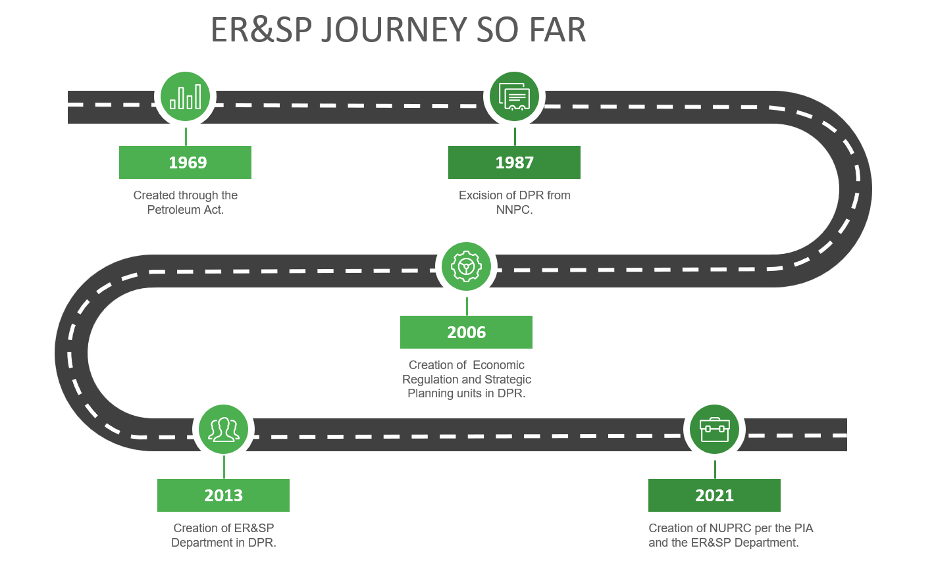
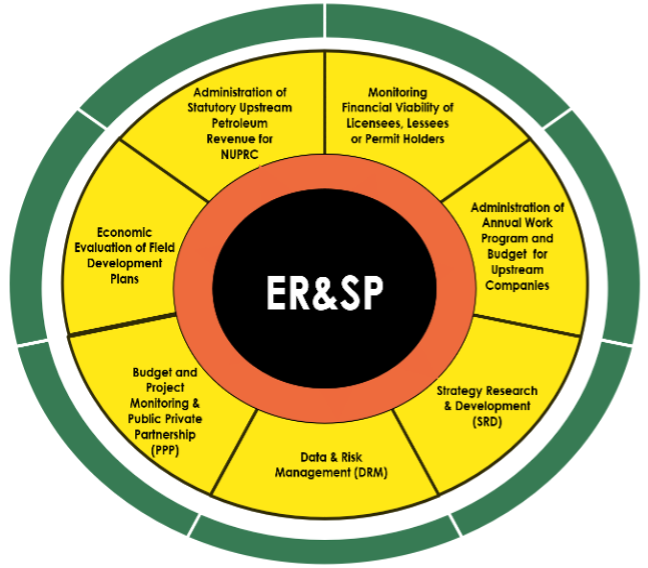

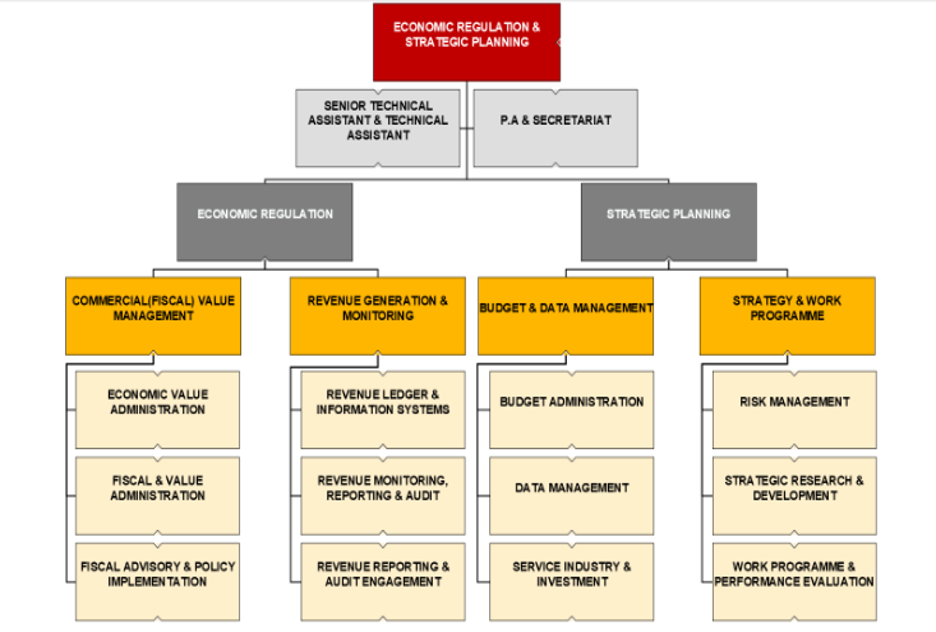

This Division ensures the Nigerian government benefits economically from petroleum resources. The division’s mandate includes managing royalties, rentals, and fees, setting market-reflective oil prices, monitoring licensees’ financial viability, approving commercial aspects of field development plans, and conducting economic studies and due diligence.
- Fiscal Value Administration Unit

Key functions
- Royalty assessment management
- Conduct market research on prices and valuation
- Regulatory compliance and reporting
Deliverables
- Publish quarterly indebtedness status of all Exploration and Production companies.
- Issuance of quarterly demand notice to the Exploration and production companies
- Publish monthly report of market analysis that monitor trends and enable the nation’s crude grade remain competitive in the international markets
- Fiscal Advisory and Policy Implementation Unit

Key function
- Advise Management on impact of Fiscal and Policy and ensure regulatory compliance in the industry.
- Administration of third-party Open Access for crude oil and gas handling and Transportation
- Mediation on conflict on gas supply debts and fiscal pricing
- Determination of Upstream Gas Cost for Domestic Gas Supply Obligation
Deliverables
- Issuance of Third-Party Crude Oil Handling and Transportation Permit
- Annual computation of domestic case cost of gas
- Economic Value Administration Unit

Key Functions
- Valuation of Petroleum Assets
- Conducting Financial Due Diligence on upstream petroleum transactions
- Field Development Plan budgeting analysis
- Monitoring Financial viability and capacity of E & P companies and Oil and Gas Service Companies
- Project cost management
- Assessment of statutory funds – Decommissioning and Abandonment (D & A) Fund, Environmental Remediation Fund (ERF), Host Community Development (HCD) Fund.
Deliverables
- Petroleum Assets Valuation Reports
- Upstream Petroleum transactions Financial Considerations Reports
- Field Development Plan Commercial Evaluation Reports
- Annual E & P Companies and Permit Holders Financial Performance, Viability and Capacity Report
- Upstream project cost Benchmarks and Analytics.
- Annual Statutory Funds Assessment Reports
Revenue Reporting & Audit Engagement Unit

Key Functions
- Revenue reporting
- Revenue audit engagement
- Stakeholder engagement
- Process improvement
Deliverable
- Monthly revenue reports for internal and external stakeholders
Revenue Monitoring, and Control Unit
The General Administration Division (GA) within the Corporate Services and Administrative Department of the Commission is comprised of various integral sections, each playing a distinct role in fostering organizational efficiency, employee well-being, and sustainable growth.
At the heart of the Commission’s workforce management lies the Human Resources Section. The Employee Performance Management and Discipline Unit (EPMD) ensure fairness in staff evaluations and disciplinary procedures, while the Manpower Resource Planning (MRP) unit optimizes workforce efficiency. The Staff Welfare and Benefits (SWB) unit goes beyond traditional HR functions, ensuring employee satisfaction through transparent compensation practices and comprehensive support.
The Human Capital Development Section strategically aligns employee skills with organizational goals, fostering continuous learning and innovation to drive sustainable success and maintain a competitive edge.
Dedicated to proactive healthcare initiatives and high standards of medical care, the Medical Section ensures employee well-being, creating an environment conducive to organizational success.
Driving organizational evolution through internal and external cooperation, the Transformation and Innovation Section integrates cutting-edge technologies and digital practices to optimize operations and achieve strategic objectives.
Nurturing positive relationships between management and staff, the IER Section fosters a harmonious work environment nationwide, contributing to the long-term success and sustainability of the Commission.
The Competency Administration Section employs innovative methods such as the NUPRC Knowledge Centre and Knowledge Sharing Sessions to foster continuous learning and professional growth among staff members, ensuring the organization remains agile and adaptive in a dynamic landscape.
In summary, the General Administration Division serves as the backbone of the Commission, ensuring efficient operations, employee well-being, and strategic alignment to drive sustainable growth and organizational success.